Parrotfish are the dominant large reef fish in the shallows. The largest species — the bumphead parrotfish — can reach 1.3 m, makes an audible crunching sound as it bites coral, and is unfazed by snorkellers at close range. Smaller species come in electric blue, pink and green colouration. The sand between coral heads in the Red Sea is largely composed of parrotfish excretion — a useful thing to mention to children.
Sea turtles — both hawksbill and green — are common at sites with intact seagrass. Green turtles are grazers and often stay in one area for 20–30 minutes; if you spot one, surface-float quietly and it will generally continue feeding within arm's length. Hawksbills are more active swimmers and tend to move through the reef rather than hovering. Do not approach from above or behind; let them move toward you. Both are protected under Egyptian law and by CITES.
Moray eels emerge from coral crevices in the early morning to hunt and are frequently seen with just their head visible in the reef. The giant moray can reach 3 m and looks alarming but is not aggressive without provocation; their constant open-mouthed appearance is respiratory, not a threat display. Do not place hands in crevices — this is a rule for snorkellers as much as divers.
Lionfish drift in the water column and rest on coral shelves at 1–3 m, and they are particularly common in Hurghada-area reefs. The dorsal, pectoral and anal spines deliver a painful venom on contact. They are slow-moving and easy to avoid once you know what to look for: fan-like pectoral fins, red and white banding, and a tendency to hover. No sudden movement is required — simply maintain 50 cm clearance.
Octopus are encountered more often at Red Sea reefs than most snorkellers expect. They rest in crevices during the day and can change colour and texture to match their background in under a second. Look for the distinctive eight-arm shape at the entrance to holes in the reef. They are not harmful and will retreat rapidly if approached. Early morning is the best time, before boat traffic disturbs the shallows.
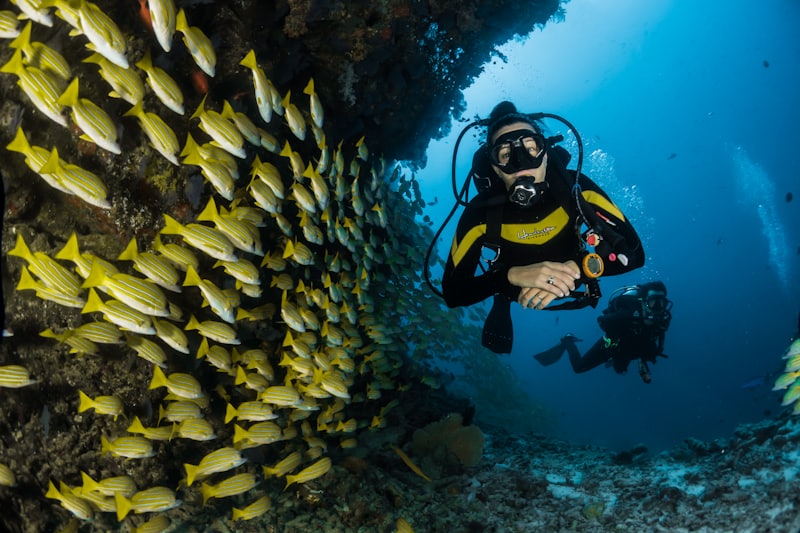
For families, the sites and the animals above are the core experience. If your group includes children who want to progress to scuba, see our certification page for the age requirements and course structures available in Hurghada. The PADI Bubblemaker course starts at age eight and is the standard first diving experience for younger children, separate from a full certification course.